


WASHINGTON — Sen. Shelley Moore Capito is pushing hard for fiber-optic internet as the primary solution for West Virginia’s broadband needs, dismissing satellite technology as inadequate for the state’s rural communities.

“We basically said, in West Virginia, it is almost impossible to be served adequately by any kind of satellite. There’s latency. You can’t get it—the trees, the hollers, all of those things—and so really we’re trying to make the case that hardline or fiber is the only way to go,” Capito said Wednesday on 580 Live with Dave Allen.
Capito has long advocated for the state to receive the full $1.2 billion initially approved for broadband expansion under the federally funded Broadband Equity, Access, and Deployment (BEAD) program. The program, first approved in 2024, was later pulled for review, and the revised proposal currently allocates $625 million. Capito has criticized this reduction and has pledged to press the federal government to deliver the full funding.
However, the push for fiber presents its own challenges. West Virginia’s mountainous terrain, with its remote hollers and rugged access, significantly increases both costs and timelines for fiber-optic deployment. Specialized equipment is needed, and unpredictable weather—including storms and high winds—can cause repeated delays. These factors make fiber installation a complex and expensive undertaking.
Despite these realities, Capito continues to argue that satellite is not a viable option. Yet services like SpaceX’s Starlink are now widely available across the state, providing high-speed internet to areas that fiber projects may take years to reach. The service offers broadband speeds sufficient for gaming, streaming, telehealth, and education, and installation is simple and immediate, although costs can be higher than traditional options.
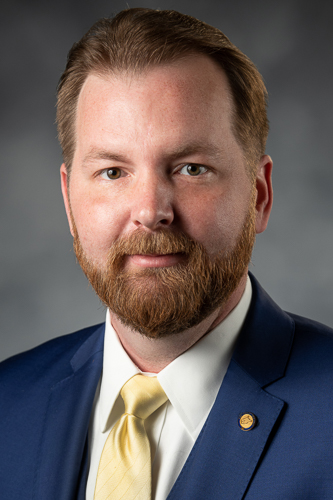
Del. Daniel Linville, R-Cabell, noted that Starlink has cleared its West Virginia waiting list and is now available almost everywhere except the Green Bank Observatory radio quiet zone.
“What’s great about it is that we don’t have to run wires for it,” Linville told WVPBS, pointing out that the service introduces market competition and immediate connectivity for residents.
While Capito frames fiber as the only acceptable solution, the combination of mountainous terrain, higher costs, and long deployment timelines raises questions about whether satellite or hybrid solutions could better serve residents in the short term.
Capito remains committed to securing the full BEAD funding and insists that fiber is the future, even as practical alternatives like Starlink are already connecting West Virginians today.